Auditing Project Management
Designed to determine the true status of work performed on a project and its conformance with the project statement of work, including schedule and budget constraints
2-DAY WORKSHOP | HRDF SBL CLAIMABLE
AUDITING PROJECT MANAGEMENT
A project management audit is an examination designed to determine the true status of work performed on a project and its conformance with the project statement of work, including schedule and budget constraints. It is an independent, structured assessment of the state of affairs conducted by a competent examiner. By inference or extrapolation, it provides insight into the work needed to meet project objectives and the adequacy of the schedule and budget to do so. In addition, it can illuminate mistakes that can cause project failure and thus can trigger timely corrective action.
For the proposed program, a basic understanding of the why, when, who, what, and how of project management audits will be discussed. Project management audits will be compared and contrasted with normal supervision of project management, with reviews conducted for the customer (whether internal or external), and with financial audits. Guidelines for choosing a qualified auditor, and a structured format is offered for preparing, performing, and reporting an audit will be presented.
Terminal Objective
The terminal objective of this Auditing Project Management session is to equip internal auditors with professional skills of managing internal audit assignments more effectively and efficiently, by learning essential knowledge, skills, tools and techniques of the PMBOK (6th Edition), an internationally-recognised Project Management Standard by Project Management Institute, US.
Key course outcomes
- Recognize why auditing projects fail;
- List critical success factors for auditing projects;
- Identify different project management process groups;
- List stages in the Project Management Life Cycle;
- Understand of project management best practices and fundamental knowledge
- Identify the scope of internal audit activities, and develop overall internal audit scope baseline;
- Estimate relevant resources required for planned internal audit activities and develop overall internal audit schedule baseline;
- Determine internal auditing budget and develop overall budget baseline;
- Identify quality requirements required for internal audit activities for controlling and assessing;
- Conduct risk-based internal audit planning and develop relevant strategy relating scope, schedule or budget as risk responses;
- Manage internal auditing’s communications and outsourced services and develop actions to mitigate changes to the baselines;
- Monitor and control the internal auditing activities to ensure execution within approved baselines.
FEATURED CLIENTS
 |
 |
 |
 |
HARNESSING KNOWLEDGE ASSETS TO ENHANCE AGILITY AT WORK SYLLABUS & OUTLINE
|
Time |
Activity |
|
|
9.00 |
Introduction and Overview |
|
|
9.10 |
Why projects fail? – The importance of Project Management and critical success factors |
|
|
9.30 |
PMI PMBOK 6 Knowledge Areas – An Introduction and Best Practices |
|
|
9.45 |
Project Management Methodologies and Life Cycle |
|
|
10.30 |
TEA BREAK |
|
|
10.45 |
Overview of Scope Management
|
|
|
11.00 |
Identifying the scope of internal audit activities (boundary) in an organisation as a whole |
|
|
11.30 |
Defining all probable auditable units (audit universe) using WBS techniques and interactive project management skills |
|
|
12.00 |
Establishing internal auditing scope baseline |
|
|
11.50 |
Developing an Audit Work Breakdown Structure |
|
|
12.10 |
Overview of Schedule Management |
|
|
12.30 |
Defining internal audit activities and nature of audit work |
|
|
12.50 |
Estimating resources requirements and requirement for procurement if any |
|
13.00 |
LUNCH |
|
|
14.00 |
Critical Path Analysis & Developing Audit Schedules |
|
|
14.45 |
Monitoring and controlling audit schedules |
|
|
15.30 |
TEA BREAK |
|
|
15.45 |
Overview of Project Cost Management |
|
|
16.15 |
Cost estimating techniques for internal audit activities |
|
|
16.30 |
Developing a Project Budget |
|
|
16.45 |
Summary of lessons learnt / Question and answer session |
|
|
17.00 |
End of Day One |
|
FAQ & FURTHER INFORMATION
The 70:20:10 Model for Learning and Development has been found to be most effective within the training profession to describe the optimal sources of learning aimed at developing work based competencies. It holds that individuals obtain 70 percent of their knowledge from job-related experiences, 20 percent from interactions with others, and 10 percent from formal educational events.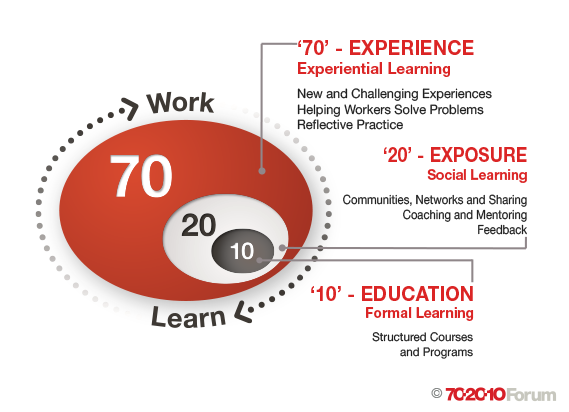
Based on this model, we propose that the Fundamentals of Project Management course be structured along similar lines. It is proposed that it is undertaken in stages. These stages will include awareness stage, appreciation stage and application stage.