
Scrum
-
2026 Update: While the core Agile principles discussed here remain highly relevant, Scrum practices and certification tracks have evolved. To master the latest frameworks and get certified, view our fully updated Scrum Master Certification Course in Malaysia for the latest class schedules and HRD Corp claimable options.
As we emerge from the COVID pandemic, complex problems are bound to emerge. Such complex problems require adoption of agile practices for innovative solutions to emerge. It requires a different way to manage a business. There are many ways to apply agile principles in practice. One common way is to use a methodology called Scrum.
Scrum solves complex problems faced and enables development of innovative ideas for improvement. These ideas come about through collaborative interaction among key stakeholders that is facilitated by a Scrum Master. A Scrum Master provides an enjoyable and a streamlined atmosphere for the development team, which in turn improves the product and fosters innovation. Such a role is fast replacing the role of a traditional Project Manager.
Scrum Masters are in high demand due to the limited number of people working in the field. For instance, in 2017, the role of a Scrum Master was ranked 10th among the most promising jobs in the world
Let’s explore why you should consider playing the role of a Scrum Master.
1. Become more valuable to the Company

Scrum decreases time to market, which means there are high returns on every investment the company makes. Since you are guiding the development process, your services become even more indispensable to the organization. For example, regular feedback through sprint reviews directly from stakeholders, including customers, enables project correction earlier which is less costly and time-consuming than later in the process.
2. Contribute towards developing “cool” products

The joy of developing products which simplify complex problems for the end users is unparalleled, and so is the recognition that comes with it.
As a Scrum Master you can contribute to delivering customer centric products and have the satisfaction of knowing that your team was pivotal to the success of the project. Moreover, it makes everyone, the company, the team, and the customers happy.
3. Be in a position of higher visibility

As a Scrum Master, you oversee every aspect of a project. This kind of visibility makes it easier to identify issues during the development phase and resolve them quickly. A complete control of the project comes with the responsibility for its failings.
Thus, encouraging you to take full accountability to reduce the risks of developing a project, which in turn makes you—as a Scrum Master—more visible to the company.
4. Drive exciting innovation

A scrum team delivers high value products to clients. To do this, they need to provide an enjoyable and conducive work environment for the members. This helps the team to focus on being self-organized, encouraging others to come up with innovative and creative ideas and increase efficiency.
As a Scrum Master, you are involved in time scaling and providing accurate details of the project requirements—deciding the flexibility of the development and guiding innovative measures to achieve the target. You are essentially driving innovation for the team to do better every time, all the time
5. Build a Promising Career Path for your future

A Scrum Masters career path is never ending. They can proceed to become Scrum mentors/coach, project managers and product owners. In addition, companies pay the Scrum Master handsomely to keep them in the company. In 2019, it is stated that 15% of responders as a Scrum Master are earning over USD100K a year without a formal certification. 50% of respondents who are Scrum Master who make over USD 75,000 annually have formal Scrum training while only 6% of those in that same range do not have formal Scrum Training.
Conclusion

It is clear that Scrum Master is valuable in any organization. You will pick up lots of skill as a once you learn and practically apply your knowledge as a Scrum Master. Being a Scrum Master is easy and you can do it at home. Sharma Management International provides certification for you to be a Scrum Master. Join us online for a 2-day Scrum Master Certification preparatory session and get certified after passing the exam while being at home.
-
2026 Update: While the core Agile principles discussed here remain highly relevant, Scrum practices and certification tracks have evolved. To master the latest frameworks and get certified, view our fully updated Scrum Master Certification Course in Malaysia for the latest class schedules and HRD Corp claimable options.
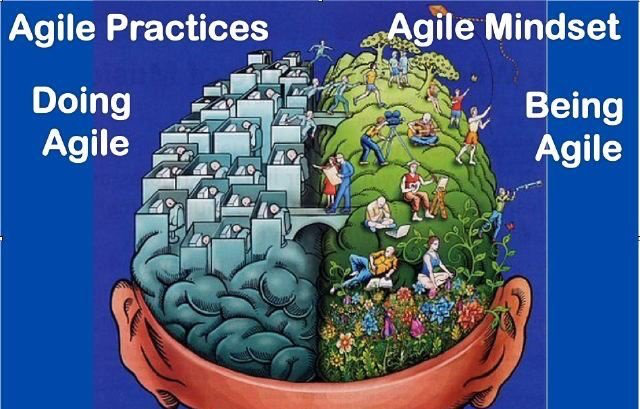
There is a very serious misconception that doing agile means being agile. Such a misconception impedes organizational attempts to pursue the part of agility. By equating being agile with doing agile, it is assumed that when agile practices and routines are undertaken using the scrum methodology, the transition from the conventional way of working to a new, better way of working is occurring.
Being led by this assumption, the tendency to upskill employees in agile practices and routines so that they begin to “do agile” overshadows the realization that doing agile does not lead to being agile over time. Hence employees learn what to but do not internalize the need to do so. They are merely doing agile, not being agile.
Being agile essentially focusses on empowering employees to harness knowledge assets to acquire and create new knowledge. The primary focus is on developing a culture of knowledge sharing that is premised on a Sense-And-Respond mindset. There is a heightened level of sensitivity of changes and the ability to respond appropriately is emphasized. Such a culture is premised on a mindset attuned towards navigating the trials and tribulations associated with turbulent business environments.
Doing agile occurs when people have been given the mandate by management to adopt scrum methodology in accordance with agile principles. They “have to” change what they do and follow strictly scrum approach based on agile practices and routines. This leads employees to believe that management knows best and they oblige blindly. The command and control mindset predominate and the culture of subservience continues albeit in a different tone. In this case, the organization may be doing agile but is not being agile.
Having a heightened state of awareness that agility essentially means developing a new way of thinking and doing is a good starting point. This awareness should be directed towards developing a desire to empower employees to seek out new innovative ideas around new problems. One effective approach used is called question storming, a session aimed at encouraging people to ask as many questions as possible to encourage them to be inquisitive. By creating an environment where being inquisitive and seeking alternative options is encouraged, more innovative ideas emerge.
How they do so in a structured and systematic way would be by adopting certain principles and practices of agility that suits them best.
When emerging problems are solved using agile practices such as updating physical planning walls for increased visibility, these practices become ingrained in the culture of the workforce. These practices serve as instruments that are used to facilitate quick decision making, encourage collaborative interaction and developing flexible processes that increases an organizations resilience. Resilience against in the face of challenges posed by volatility, uncertainty, complexity and ambiguity. This develops over time when an environment that nurtures agility and transparency is fostered by management who willingly shed the notion that “they know best”
Over time, agile practices become the norm and this facilitates the process of harnessing knowledge assets to remain ahead of the curve. When this happens, an organization is said to be agile, not one that just does agile. This should be the primary aim and focus of organizations pursuing the path of agility.
-

There is a very serious misconception that doing agile means being agile. Such a misconception impedes organizational attempts to pursue the part of agility. By equating being agile with doing agile, it is assumed that when agile practices and routines are undertaken using the scrum methodology, the transition from the conventional way of working to a new, better way of working is occurring.
Being led by this assumption, the tendency to upskill employees in agile practices and routines so that they begin to “do agile” overshadows the realization that doing agile does not lead to being agile over time. Hence employees learn what to but do not internalize the need to do so. They are merely doing agile, not being agile.
Being agile essentially focusses on empowering employees to harness knowledge assets to acquire and create new knowledge. The primary focus is on developing a culture of knowledge sharing that is premised on a Sense-And-Respond mindset. There is a heightened level of sensitivity of changes and the ability to respond appropriately is emphasized. Such a culture is premised on a mindset attuned towards navigating the trials and tribulations associated with turbulent business environments.
Doing agile occurs when people have been given the mandate by management to adopt scrum methodology in accordance with agile principles. They “have to” change what they do and follow strictly scrum approach based on agile practices and routines. This leads employees to believe that management knows best and they oblige blindly. The command and control mindset predominate and the culture of subservience continues albeit in a different tone. In this case, the organization may be doing agile but is not being agile.
Having a heightened state of awareness that agility essentially means developing a new way of thinking and doing is a good starting point. This awareness should be directed towards developing a desire to empower employees to seek out new innovative ideas around new problems. One effective approach used is called question storming, a session aimed at encouraging people to ask as many questions as possible to encourage them to be inquisitive. By creating an environment where being inquisitive and seeking alternative options is encouraged, more innovative ideas emerge.
How they do so in a structured and systematic way would be by adopting certain principles and practices of agility that suits them best.
When emerging problems are solved using agile practices such as updating physical planning walls for increased visibility, these practices become ingrained in the culture of the workforce. These practices serve as instruments that are used to facilitate quick decision making, encourage collaborative interaction and developing flexible processes that increases an organizations resilience. Resilience against in the face of challenges posed by volatility, uncertainty, complexity and ambiguity. This develops over time when an environment that nurtures agility and transparency is fostered by management who willingly shed the notion that “they know best”
Over time, agile practices become the norm and this facilitates the process of harnessing knowledge assets to remain ahead of the curve. When this happens, an organization is said to be agile, not one that just does agile. This should be the primary aim and focus of organizations pursuing the path of agility.
-
2026 Update: While the core Agile principles discussed here remain highly relevant, Scrum practices and certification tracks have evolved. To master the latest frameworks and get certified, view our fully updated Scrum Master Certification Course in Malaysia for the latest class schedules and HRD Corp claimable options.
Under pressure, a spring recoils to take the pressure as it is agile. However, a thin plastic sheet cracks as it is fragile. The consequence of what happens depends on the characteristic of the spring and the plastic sheet. The pressure applied is akin to challenges posed in this ever-turbulent environment that breeds disruptive technologies at an alarming pace. Organizations are either able to adapt to this turbulence or disintegrate due to it, depending on how agile or fragile they are.
The desire to and realization of the importance of becoming agile is predominant. How exactly does a business entity become agile and what should be done to avoid becoming fragile in the face of the relentless onslaughts of challenges being faced?
With the advent of disruptive technologies, business entities have to shift their preference to remain agile. Otherwise they become fragile and susceptible to failure. As long as they plan strategically, learn when necessary and exploit existing opportunities, they remain fragile. The degree to which these preferences shift towards scenario planning, unlearning and relearning continually as well as exploring beyond existing opportunities, they become increasingly agile.
Scenario Planning over Strategic Planning
Strategic planning involves structured consideration of internal and external issues to develop the one true ‘best way forward’. Scenario planning involves developing different scenarios and analyzing different ways of moving forward. Strategic planning is premised on a predictive approach to strategy development that assumes it is possible to predict the future. Scenario planning is premised on an adaptive approach that embraces change and incorporates this into a planning horizon.
This involves asking and seeking answers to the “what if” questions, rather than assuming all will work well once a strategic plan has been established. When business entities encourage senior management to ask “what if” questions regularly, they remain agile. Otherwise they become fragile, susceptible to the changing business terrain.
Unlearning and Relearning over Learning
As uncertainty takes center stage within the business ecosystem, the need for better understanding increases. Better understanding comes from developing accurate and deep insights of issues from many different perspectives that require unlearning previously held perspectives.
A willingness to unlearn, learn and relearn continually is required to adapt and remain agile. Acquiring knowledge only when necessary without sufficient understanding leads to fragility, especially whenever the need for new processes and systems overwhelms the capacity to develop them. Comfort zones are the enemy of growth.
Exploration over Exploitation
When the focus is in exploiting the existing business model, fragility sets in whenever the existing boundaries of exploitation are approached. Many car manufacturers in the US suffered huge losses when to the exploitation of their existing patents and intellectual property led to market fatigue and declining sales margins. Their inability to innovate and ‘explore’ led to their downfall, and the rise of Tesla Motors. Elon Musk, an ‘explorer’ in the truest sense, managed to forge a path for himself beyond the self-imposed boundaries of the auto industry, and challenged the very notion of ‘driving’, and the concept of ‘cars’. Only when faced with increased competition did the traditional car manufacturers relent and explored other possibilities, such as electric vehicles and self-autonomous vehicles.
To explore beyond the boundaries of existing expertise and capabilities requires agility and adaptability. Better mechanisms for optimizing existing knowledge assets are sought for exploration to occur. Knowledge acquisition, creation and integration on a regular basis becomes a mainstay that facilitates agility and adaptability. By exploring what lies beyond what they are doing, they remain agile.
To be agile, business entities should shift their preference towards scenario planning, unlearning and relearning and engage in exploration over exploitation. By doing so, they remain agile, otherwise, they become fragile in the face of disruptive technologies they encounter.
Dr Rumesh Kumar
January 2020
-
2026 Update: While the core Agile principles discussed here remain highly relevant, Scrum practices and certification tracks have evolved. To master the latest frameworks and get certified, view our fully updated Scrum Master Certification Course in Malaysia for the latest class schedules and HRD Corp claimable options.
What you need and how you do it?
Whenever the need to convince someone arises, the need for justification always arises as well. Justification means providing a reason for proposing something new or different. It could be a new approach you want to adopt or when seeking funding for projects that involve considerable need for adaptation to changing requirements.
This is when it becomes imperative for the Product Owner to justify the deployment of a project undertaken based on a scrum-based framework. All stakeholders involved, including clients have to understand that scrum adopts a “Value Driven Delivery” concept unlike traditional projects. Scrum, unlike traditional projects is designed to drive value throughout the project, not only achieve value at the end of the project.
In this regard, for scrum-based projects, business justification occurs on a continuous basis; at the beginning, at established intervals throughout the project lifecycle and whenever a risk or issue presents itself. This justification process takes place prior to the initiation of a project and is consistently validated throughout the lifecycle.
Here at Sharma Management International, we believe that this business justification should entail three steps:
- Presentation and Evaluation of a Business Case – Usually a project is generally evaluated and approved by the Product Owner in a Scrum friendly company. After approval, the project is documented and presented as a business case. Subsequently, the Product Owner creates a Project Vision Statement and obtains approval from executives and/or the project or program management board.

- Justification of Continuous Value - After decision makers have approved the Project Vision Statement, it is baselined and delineates the business justification. The business rationalization is continuously validated during the entire project execution stage and at predefined milestones

- Benefits Realization Confirmation – The Product Owner confirm the realization of customer benefits throughout the project and when the User Stories in the Prioritized Product Backlog have been developed and accepted.

By ensuring that these steps are undertaken without fail, business justification for scrum projects increases confidence levels of the ability for scrum projects to provide value driven delivery.
Business Justification can be learnt at a deeper level by joining our online Scrum Master Certification course on 14 – 15 July 2020. Click here to find out more.
Dr Rumesh Kumar,
PMP, SMC, CST
- Presentation and Evaluation of a Business Case – Usually a project is generally evaluated and approved by the Product Owner in a Scrum friendly company. After approval, the project is documented and presented as a business case. Subsequently, the Product Owner creates a Project Vision Statement and obtains approval from executives and/or the project or program management board.
-
The underlying purpose of any project is to add value. Projects serve as vehicles that enable changes, which should bring upon benefits that exceed the cost of making these changes.
As long as this occurs, a project is deemed to have been effectively and efficiently undertaken. Project managers are entrusted with the responsibility of ensuring that both the performing organization, as well as to the clients they serve, benefit from projects undertaken.
Given the very large number of interrelated considerations as well as the highly volatile environments in which projects operate, the prospect of adding value becomes increasingly difficult. Uncertainties that affect projects abound. Costs of undertaking projects continue to rise. Requirements from stakeholders become increasingly ambiguous. These factors detract value instead of adding value.
As project managers, we have to overcome any potential threats that impede the realization of this value. This include the need to protect the “Agile Ozone Layer”. This Agile Ozone Layer is usually attacked from multiple angles, from rigid and bureaucratic organizational structures, command and control style leaderships, to a functional silo mentality and resistant vendors and customers.
To ride the wave of such impediments that surface, a heightened sense of opportunistic awarenessbased on careful examination of business value undertaken throughout the project is required. Business Value refers to the net quantified benefits derived from the business endeavour being undertaken by the company.
This requires developing a sense of urgency for intelligent collection and analysis of relevant data to make decisions that enable realization of business value to the project as well as ensuring that the momentum of continual improvement is maintained. Doing the above correctly occurs only when project managers select project management methodologies that commensurate with the business environment the projects are undertaken.
Developing and maintaining a sense of urgency
When projects are to be executed based on evolving requirements in a highly turbulent business environment, the agile project management approach is most applicable. Such an approach requires a sense of urgency to be ingrained within the project team.

Changes have to be embraced and adapted to through collaborative efforts with customers. Only by developing a sense of urgency will the cost associated with delays in adapting to changing requirements can be curtailed.
Firstly, we shall have to establish a Product Roadmapthat provides an initial visual timeline based on the Project Vision. Then releases are planned using a Release Planningthat defines when deliveries may be made based on frequency of delivery as well as extent of adaptation required. A more incremental model approach, where deliverables are made at regular intervals, speeds up the delivery of value to the client.
For situations where there is no need for deliveries to be made incrementally, but there is a very urgent need for the features to be aligned perfectly to the changing requirements of the client, an iterative modelis adopted.
Realization of Business Value
To realize business value, a deep understanding of not only what the customer requires but also the value associated with those requirements has to be established.

The project team needs to ascertain the “why” behind the “what”. This is required for both the performing organization as well as for the client. The value or specific benefits the project delivers via the end deliverable needs to be understood and internalized.
This requires gradually uncovering all uncertainties within specific release cycles and working time blocks, that impede the ability of the project team to deliver the value that is expected. The ability to do so is enhanced when delivery is made incrementally based on priorities set by the client. This way, feedback from each incremental deliverable, as well as uncertainties uncovered, become valuable inputs for future deliveries. In this way the project “delivers value incrementally”, and in the process of doing so, enables realization of business value throughout the project life cycle.
Rapid Data collection and analysis
Successfully delivering value requires constant data collection and assessment of progress. It requires developing insights on what works and what does not. This is done not based on assumption, but on actual data.

To ascertain whether this is indeed the case, developers aim to produce what is called a Minimum Viable Product as a prototype. Such a product contains the smallest collection of features that enable customers to consider the product as being functional. This provides developers with an opportunity to test features and ascertain important improvement points quickly and effectively.
From the company’s perspective, this exercise also helps to establish what the smallest amount of value that can be added to a product or service that benefits the business as well. Collecting data on minimal new value propositions and the corresponding positive business impact provides an impetus for the company to decide quickly and effectively on what value additions it should incorporate in order to maximize business growth prospect. This concept of Minimum Business Increment focusses on therealization of business value.

In summary, delivering value requires a combination of collaborative efforts of all stakeholders who are committed towards developing and preserving an Agile Ozone Layer that makes it conducive to undertake agile project management.
A sense of urgency to deliver value needs to permeate throughout the organization. This urgency extends to rapid data collection and analysis where Minimal Viable Product and Minimum Business Increment considerations are routine initiatives undertaken using a delivery model based on an incremental or iterative approach.
-
2026 Update: While the core concepts in this article remain relevant, the PMI exam requirements have evolved. If you are looking to get certified, view our fully updated PMP Certification Training Course in Malaysia for the latest class schedules and HRD Corp claimable options.
The underlying purpose of any project is to add value. Projects serve as vehicles that enable changes, which should bring upon benefits that exceed the cost of making these changes.
As long as this occurs, a project is deemed to have been effectively and efficiently undertaken. Project managers are entrusted with the responsibility of ensuring that both the performing organization, as well as to the clients they serve, benefit from projects undertaken.
Given the very large number of interrelated considerations as well as the highly volatile environments in which projects operate, the prospect of adding value becomes increasingly difficult. Uncertainties that affect projects abound. Costs of undertaking projects continue to rise. Requirements from stakeholders become increasingly ambiguous. These factors detract value instead of adding value.
As project managers, we have to overcome any potential threats that impede the realization of this value. This include the need to protect the “Agile Ozone Layer”. This Agile Ozone Layer is usually attacked from multiple angles, from rigid and bureaucratic organizational structures, command and control style leaderships, to a functional silo mentality and resistant vendors and customers.
To ride the wave of such impediments that surface, a heightened sense of opportunistic awarenessbased on careful examination of business value undertaken throughout the project is required. Business Value refers to the net quantified benefits derived from the business endeavour being undertaken by the company.
This requires developing a sense of urgency for intelligent collection and analysis of relevant data to make decisions that enable realization of business value to the project as well as ensuring that the momentum of continual improvement is maintained. Doing the above correctly occurs only when project managers select project management methodologies that commensurate with the business environment the projects are undertaken.
Developing and maintaining a sense of urgency
When projects are to be executed based on evolving requirements in a highly turbulent business environment, the agile project management approach is most applicable. Such an approach requires a sense of urgency to be ingrained within the project team.
Changes have to be embraced and adapted to through collaborative efforts with customers. Only by developing a sense of urgency will the cost associated with delays in adapting to changing requirements can be curtailed.
Firstly, we shall have to establish a Product Roadmapthat provides an initial visual timeline based on the Project Vision. Then releases are planned using a Release Planningthat defines when deliveries may be made based on frequency of delivery as well as extent of adaptation required. A more incremental model approach, where deliverables are made at regular intervals, speeds up the delivery of value to the client.
For situations where there is no need for deliveries to be made incrementally, but there is a very urgent need for the features to be aligned perfectly to the changing requirements of the client, an iterative modelis adopted.
Realization of Business Value
To realize business value, a deep understanding of not only what the customer requires but also the value associated with those requirements has to be established.
The project team needs to ascertain the “why” behind the “what”. This is required for both the performing organization as well as for the client. The value or specific benefits the project delivers via the end deliverable needs to be understood and internalized.
This requires gradually uncovering all uncertainties within specific release cycles and working time blocks, that impede the ability of the project team to deliver the value that is expected. The ability to do so is enhanced when delivery is made incrementally based on priorities set by the client. This way, feedback from each incremental deliverable, as well as uncertainties uncovered, become valuable inputs for future deliveries. In this way the project “delivers value incrementally”, and in the process of doing so, enables realization of business value throughout the project life cycle.
Rapid Data collection and analysis
Successfully delivering value requires constant data collection and assessment of progress. It requires developing insights on what works and what does not. This is done not based on assumption, but on actual data.
To ascertain whether this is indeed the case, developers aim to produce what is called a Minimum Viable Product as a prototype. Such a product contains the smallest collection of features that enable customers to consider the product as being functional. This provides developers with an opportunity to test features and ascertain important improvement points quickly and effectively.
From the company’s perspective, this exercise also helps to establish what the smallest amount of value that can be added to a product or service that benefits the business as well. Collecting data on minimal new value propositions and the corresponding positive business impact provides an impetus for the company to decide quickly and effectively on what value additions it should incorporate in order to maximize business growth prospect. This concept of Minimum Business Increment focusses on the realization of business value.
In summary, delivering value requires a combination of collaborative efforts of all stakeholders who are committed towards developing and preserving an Agile Ozone Layer that makes it conducive to undertake agile project management.
A sense of urgency to deliver value needs to permeate throughout the organization. This urgency extends to rapid data collection and analysis where Minimal Viable Product and Minimum Business Increment considerations are routine initiatives undertaken using a delivery model based on an incremental or iterative approach.
November 2020
-
2026 Update: While the core Agile principles discussed here remain highly relevant, Scrum practices and certification tracks have evolved. To master the latest frameworks and get certified, view our fully updated Scrum Master Certification Course in Malaysia for the latest class schedules and HRD Corp claimable options.
The emergence of scrum as an alternative approach to managing projects has been bewildering. It started off as a methodology suited primarily for the IT industry but has now been touted as the mainstay of project management in an increasingly turbulent business environment. So what is “scrum” and why is it gaining such rapid popularity? This article aims to shed some light towards answering this question.

 |
 |
 |
 |
 |
 |