
Surviving the onslaught of ChatGPT :A consultant’s perspective

Artificial Intelligence, AI enables tasks routinely undertaken by intelligent beings to be undertaken by a digital computer or computer-controlled robot. It involves developing systems endowed with the intellectual processes of reasoning, discovering meaning, generalizing, or learning from past experience.
ChatGPT, the Artificial Intelligence, AI Powered language model developed by Open AI. The model’s intelligence is based on vast amounts of data from the internet written by humans, including conversations that address a very wide range of applications.
A Goldman Sachs study recently undertaken revealed that 300 million full-time jobs worldwide could be impacted by generative AI tools. This has the potential of causing a significant disruption to the job market. This includes white collar jobs that undertaken by knowledge workers such as consultants.

Most organizations rely on consultants when dealing with leveraging on opportunities or addressing threats that lie outside their expertise. This reliance has resulted in the emergence of a wide range consulting firms capable of providing expertise in acquiring and sharing critical knowledge that such organizations lack.
At present, most consulting firms facilitate the acquisition and distribution of critical knowledge required for organizations to prosper. However, this reliance can be significantly reduced in the near future by the rapid advancement of artificial intelligence based systems. When organizations gradually develop knowledge management infrastructures that are integrated with artificial intelligence systems, the need to seek external expertise to acquire and distribute critical knowledge needed will decline. Such systems will enable organizations to acquire and distribute critical knowledge at ease using AI tools such as ChatGPT.
However, knowledge management involves more than just acquiring, storing and distributing knowledge. It involves using knowledge distributed. This involves facilitating the amalgamation of insights and experience within the organization. The integration of artificial intelligence systems may help in replacing consultants insofar as acquiring, storing and distributing knowledge. However, unless such knowledge is put to use, the process of managing knowledge will be severely limited as per the diagram below.
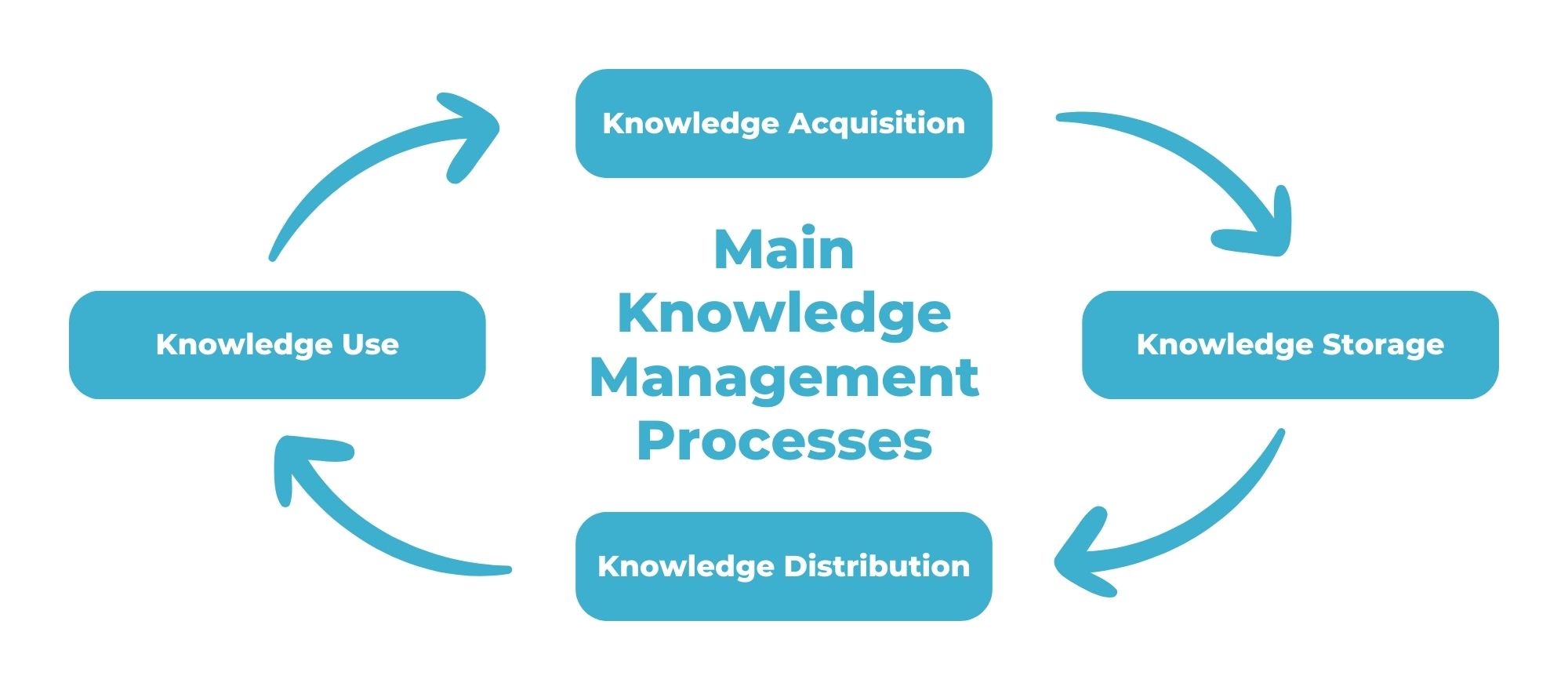
For consulting firms to survive the onslaught of ChatGPT, a realisation that their expertise in acquiring critical knowledge will decline and correspondingly focus on helping organizations use such knowledge is required. This will enable them to refocus their attention towards analysing knowledge acquired by AI powered tools and assisting organizations in using new knowledge acquired from such tools.
Skills in circumventing cultural and structural impediments that impede such using knowledge acquired will be much sought after. Unless such skills are developed, consultants ability to assist organizations ability to use critical knowledge acquired will be limited.
Being able to support organizations in this regard may be something consulting firms need to seriously consider as an avenue to improve in order to remain relevant. Such expertise will insulate them as it is beyond the capability of AI that only specializes in acquiring and distributing knowledge in general, not using such knowledge to suit cultural and structural norms within organizations.

Consulting firms have to be acquainted with all aspects of knowledge management, including having adequate expertise in using newly acquired knowledge. Unless they sense this seismic shift in their clients expectations, change their business models by acquiring such expertise and be in a position to apply such skills, the value they bring to organizations will diminish.
In summary, to survive the onslaught of ChatGPT, consulting firms need to remodel their unique selling points from being able to acquire and share critical knowledge to being better acquainted in using such critical knowledge acquired.
Dr Rumesh Kumar,
Sharma Management International.