
Beyond the Bottom Line: 5 Reasons Sustainable Project Management is the Future of Malaysia’s Industries
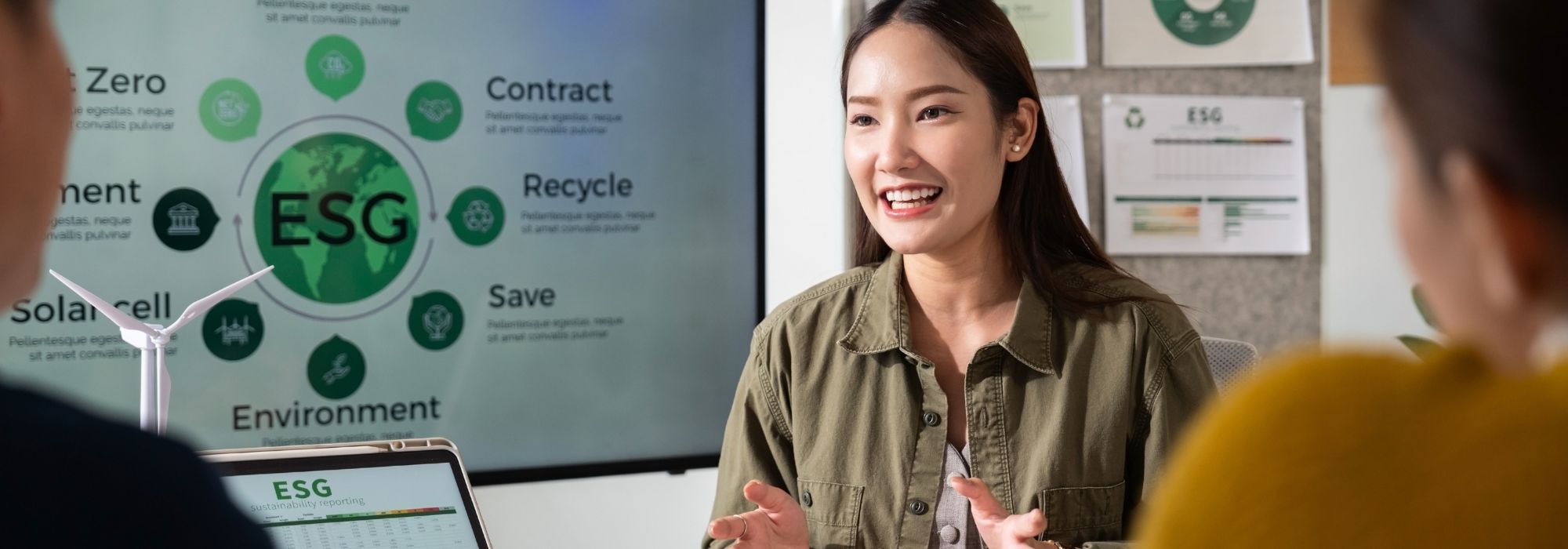
In 2026, the definition of a "successful project" in Malaysia has fundamentally shifted. While the "Iron Triangle" of time, cost, and scope remains, a new dimension has become non-negotiable: Sustainability.
With the activation of the National Sustainability Reporting Framework (NSRF) and the National Energy Transition Roadmap (NETR), project managers are no longer just delivering assets they are delivering long-term value.
Here are 5 key reasons why Sustainable Project Management (SPM) is now the most critical skill set for Malaysian professionals.1. Regulatory Compliance and the "Bursa Factor"

As of January 2026, mandatory ESG reporting has expanded to include all Main Market-listed companies in Malaysia. This isn't just an accounting exercise; it is a project management challenge.
Projects must now provide verifiable data on Scope 1 and Scope 2 emissions. Sustainable project management ensures that data collection and carbon footprinting are "baked into" the project lifecycle from initiation, ensuring compliance with IFRS S1 and S2 standards and avoiding the risk of regulatory penalties.
2. Unlocking "Green Finance" and Investment

The Malaysian government has allocated significant funds, such as the Green Technology Financing Scheme (GTFS), to support sustainable transitions. Investors and financial institutions are increasingly prioritizing projects that demonstrate high ESG maturity. By adopting a sustainable project framework, managers can lower their organization's cost of capital. A "Green" project is no longer just ethically sound it is financially superior, attracting global impact investors and securing better interest rates from local banks.
3. Future-Proofing Against Climate Risks

Malaysia’s unique geography makes our infrastructure projects particularly vulnerable to climate-related disruptions, from monsoon-driven floods to extreme heat.
Traditional project management often treats environmental factors as external risks to be mitigated. Sustainable Project Management treats them as core constraints. By integrating circular economy principles and climate-resilient design, project managers ensure that assets built today remain operational and valuable in 2040 and beyond.
4. Supply Chain Resilience and Social License

The "Social" in ESG is often overlooked, but in Malaysia’s manufacturing and construction sectors, labor practices and community impact are under the microscope.
Sustainable project management focuses on "Just Transition" principles ensuring local communities benefit from projects and that supply chains are free from ethical breaches. Securing a "Social License to Operate" is faster and more cost-effective than managing the fallout of a community protest or a labor audit.
5. Operational Efficiency and Waste Reduction

There is a persistent myth that "Green" equals "Expensive." In reality, sustainable project management is about resource optimization.
By utilizing methodologies like PRiSM™ (Projects integrating Sustainable Methods), teams focus on reducing material waste, optimizing energy consumption, and implementing value management. In the long run, a project that uses fewer resources and generates less waste is fundamentally more profitable and efficient than a traditional one.
Conclusion

Sustainable Project Management is the bridge between a company’s high-level ESG goals and its daily operations. At Sharma Management International, we believe that the project managers who master these green competencies will be the ones leading Malaysia’s most significant transformations over the next decade.
The transition is here. Are your project management practices ready for the demands of 2026?