How to Measure Project Success in Government Projects
Within a business environment, projects drive change to leverage on opportunities to benefit the organisation. To do this, best practice-based concepts, principles and models typically used in project management is applied rigorously to achieve the result of timely completion within the budget. However, applying these measures of success rigidly can backfire when seeking to fulfil the purpose of undertaking government projects.
Unlike commercially driven projects, government projects are fundamentally purpose driven. They are meant to ensure societal wellbeing, economy prosperity and environmental sustainability. Realising the purpose involves incorporating measures such as societal wellbeing, economy prosperity and environmental sustainability in addition to cost, time and scope-based performance measures.

By doing so, cost containment and timely delivery would not be pursued at the expense of achieving the purpose. This will require a shift in the planning, execution as well as monitoring and control of projects.
This article proposes a change in the identification of success criteria for projects undertaken by the government in Malaysia. This change in success criteria should be one that incorporates the extent to which they contribute towards fulfilling the purpose for undertaking such projects.

Planning
Aspects relating to planning for such projects need to be reviewed. Projects should be prioritised and selected based on the extent to which they meet the tri-fold purpose of societal wellbeing, economy prosperity and environmental sustainability. The economic viability and feasibility of doing so should be undertaken prior to the award of such projects. Consultants and contractors vying for such projects should provide inputs on how they can contribute to fulfilling the tri-fold purpose and selected based on their ability to do so.
For government-based projects, project scopes should include considerations for societal wellbeing and environmental sustainability. These should be documented in a benefits management plan that highlights positive benefits the projects will bring about to the economy, society and the environment. Such a plan should be reviewed again at the end of the project to assess the extent to which the project has been completed successfully.
Risk identification and assessments should include risks that affect societal wellbeing, environmental sustainability and post project economic impact. Detailed analysis of such risks as well as quantifiable risks responses that minimize negative impacts and maximize positive impacts on societal well-being and environmental degradation should be developed and monitored.
Quality plans of expectations for economic development after the projects should be deliberated upon and referred to as a key performance base line. Such plans should include considerations of economic development prospects as well as regeneration of resources and energy after the completion of the project over a defined period.
Execution & monitoring
Projects undertaken by the government are meant to benefit the people, sustain the environmental ecological balances and enable economic prosperity to flourish. As such, they should be executed and supported based on not only meeting the cost, time and scope requirements but also the social, economic and environmental aspects.
In this regard, regular audits on these parameters of reference will be required and payments will be made subject to the compliance to the plans developed to fulfil the purpose of the project in addition to timely completion of the project. Contractors selected for the project should be well versed with aspects relating to sustainable project management and be incentivised to seek avenues to minimize negative externalities arising out of the projects.
Agility Imperative
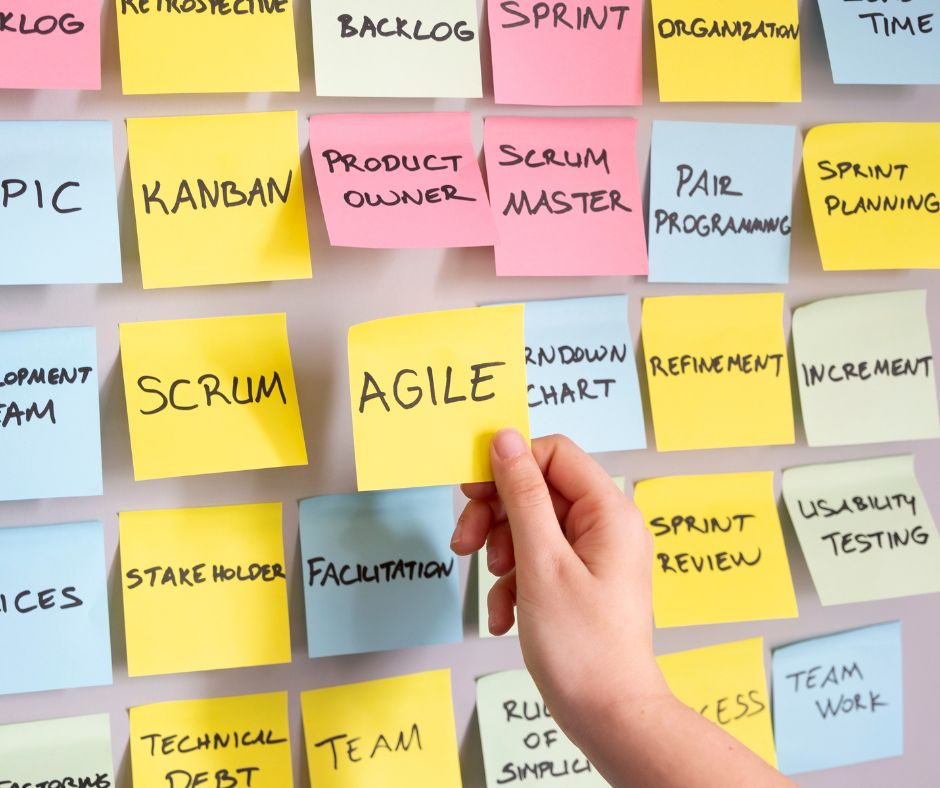
Adapting to the ever-evolving technological landscape demands project managers to engage in continuous learning and adaptation. The need to sense changing needs and requirements must be complemented with the ability to respond appropriately to that change. This will involve understanding not only how to use new technologies but also why they are being used and how to strategically integrate them into project workflows.
Assessing the value of new technologies and make informed decisions about which tools to implement as new challenges unfold is a key agility imperative in this regard. This requires a critical eye and an understanding how to adapt to changing needs of each project in a timely and agile manner.
Way forward
It is time for us to redefine the performance measurement baselines for government led projects. Such baselines determine how success of government-based projects is established. To do so, metrics for measuring societal wellbeing and delivery being, economic prosperity and environmental sustainability must be established and adhered to at the beginning of such projects. These metrics should be used as a guidepost for planning and as a baseline for project monitoring.
There should be a net positive result when comparing measures for societal wellbeing, economic prosperity and environmental sustainability before and after the project. By focussing on and incentivizing contractors in achieving the long-term purpose in addition to the immediate results, the result will be an increase in the quality of life of all Malaysians.
Are you equipped to lead government projects that deliver real impact—not just finish on time?
Led by an expert with over 20 years of experience in public and private sector project delivery, our training equips you with the frameworks, tools, and mindset needed to manage purpose-driven projects. Learn how to plan, execute, and measure success using real impact metrics—societal wellbeing, economic value, and environmental sustainability—so your projects deliver results that truly matter.